TAILWIND joins new European wind innovation hub

The Wind Innovation Cluster Hub brings TAILWIND to strengthen the visibility of EU-funded wind research and create new opportunities for collaboration

Europe’s wind energy transition depends on more than developing new technologies. Research results also need to reach the industries, policymakers and organisations that can put them into practice. Yet EU-funded projects often communicate separately, limiting opportunities to share knowledge and address common audiences.

TAILWIND has therefore joined the newly established Wind Innovation Cluster Hub, coordinated by PNO Innovation. The initiative connects 21 Horizon Europe projects working across circularity and advanced materials: ATLANTIC, BLADE2CIRC, CIRCWIND, DTWO, ECORES WIND, EOLIAN, ICONIC, INF4INiTY, InterOPERA, LIGHTWIND, MADE4WIND, MERIDIONAL, REFRESH, SUDOCO, SUSTAINOW, TAILWIND, TWAIN, TWINVEST, VERTI-GO, WHEEL and WindTwin.

Together they form a collaboration-driven community with a shared goal: building an ecosystem of knowledge exchange that advances wind energy innovation and supports the EU’s climate and energy security objectives. TAILWIND contributes its research on more sustainable anchoring and mooring systems for floating offshore wind, working to reduce material use and limit impacts on the seabed and marine environment.

Along with TAILWIND the hub’s members feature three other projects part of Fondazione ICONS’s wind energy portfolio, addressing complementary innovative pathways: MERIDIONAL, improving predictions of wind energy yield and structural loads across onshore, offshore and airborne wind; SUDOCO, developing a data-driven control room to improve offshore wind farm operations; and DTWO, creating a federated digital twin for offshore wind.

Crossing floating structures, farm operation, modelling and digital tools, these projects reflect the width of the cluster. Through its wider community of 21 EU funded projects, Wind Innovation Cluster Hub will share challenges and coordinate efforts to provide a clearer view of how European research is supporting the development of wind energy.

Read here the official press release and follow the Wind Innovation Cluster Hub on LinkedIn for updates, events and upcoming initiatives.

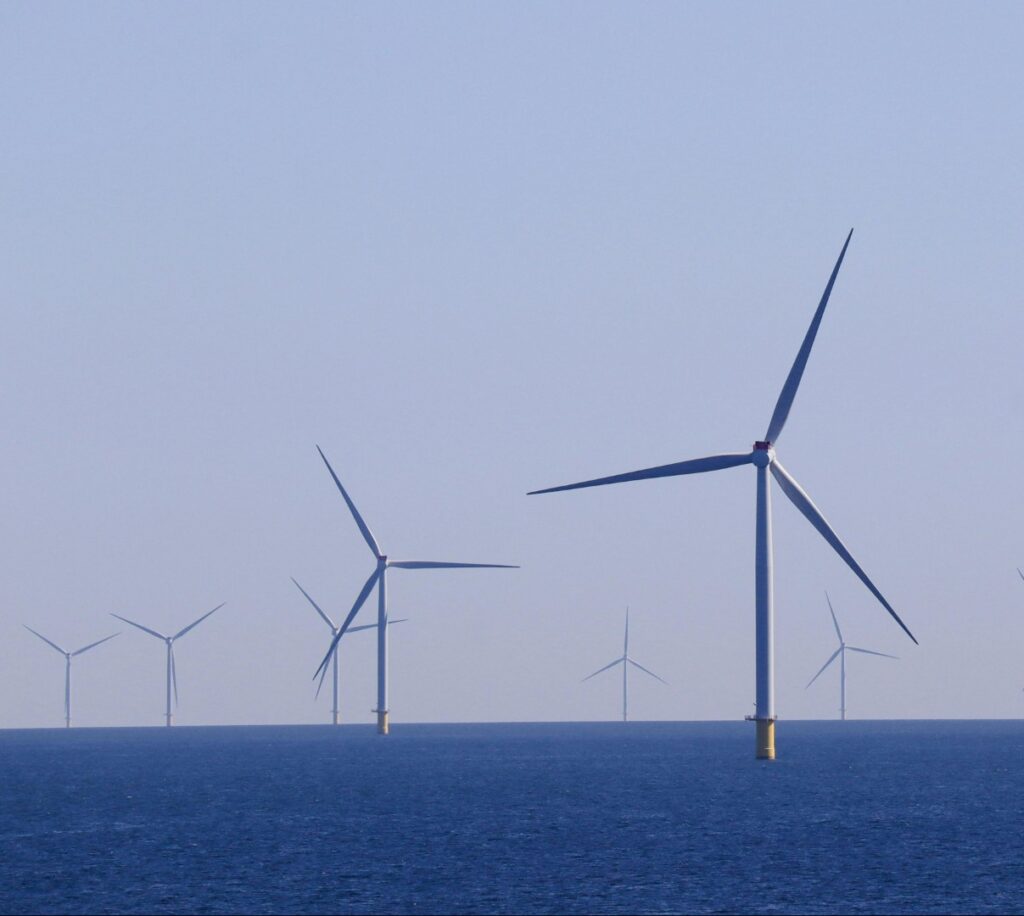
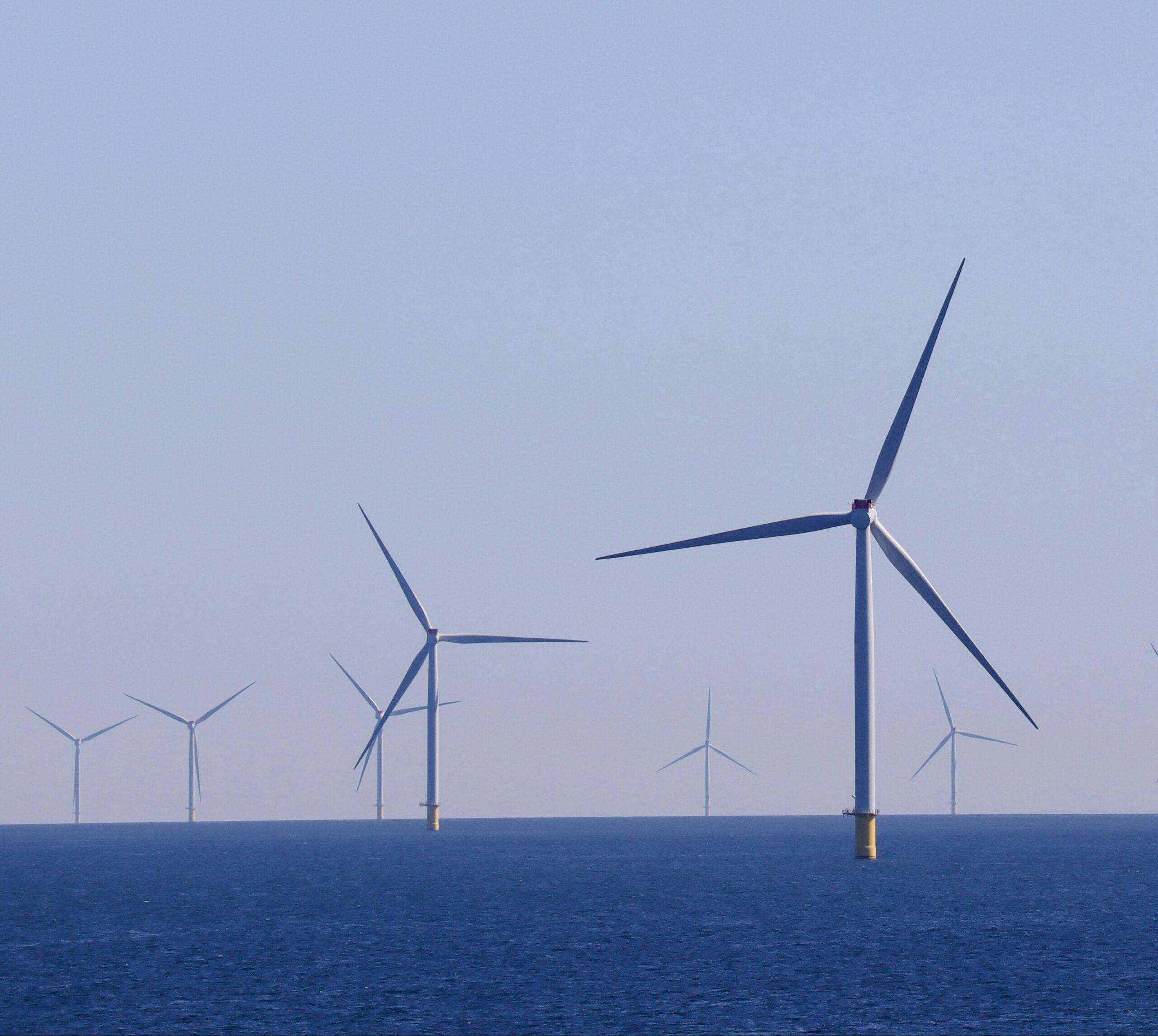
Photo credits: Norbert Pietsch da Pixabay

August 25, 2026

TAILWIND newsletter four is here!

TAILWIND’s fourth newsletter spotlights our latest factsheet and recent joint activities, while looking ahead to the upcoming events

The fourth issue of the TAILWIND newsletter has just landed in subscribers’ inboxes and is now available online. Catch up on the latest project news, resources and upcoming events, and subscribe here to receive the next issue.

Over the last six months, this spirit of collaboration has shaped much of what we have done at TAILWIND. On Global Wind Day, we’ve launched the #EUWindFuture campaign with sister projects DTWO, MERIDIONAL and SUDOCO, to highlight the progress of the wind sector and the work still ahead,

Three other sister projects joined us at WindEurope 2026 in Madrid where NGI and TECNALIA contributed to the discussion with insights on how offshore wind can scale up consistently. You can find our video interviews from the event with MADE4WIND, INF4INiTY and FLOATFARM here below, in the newsletter.

This edition puts one new resource in the spotlight. Our factsheet, “Keeping floating wind at the forefront”, brings the project’s preliminary findings on sustainable station-keeping technologies, together in one accessible read for a broad audience.

We will be taking the factsheet on the road this autumn. On September, TAILWIND joins OASIS 2026 in Paris, the first International Seminar on Offshore Anchorage Systems with our partners NGI and SINTEF Ocean. A few weeks later, ICONS will head to NetZero Milan 2026 on behalf of TAILWIND and many other EU funded projects working on renewable energy research and innovation. If you will be in Paris or Milan come and find us!

This newsletter also looks at the work shaping TAILWIND’s next steps. At our third General Assembly in Bilbao, partners refined the project’s roadmap, welcomed new expertise and explored TECNALIA testing facilities supporting the development of offshore technologies.

Thank you for following and supporting the TAILWIND project!

The TAILWIND team

Find here the full online version

July 30, 2026

Keeping floating wind at the forefront

A new factsheet explores key insights on sustainable station-keeping systems for floating offshore wind, focusing on anchors and fibre ropes.

Floating offshore wind is often pictured through what we see above the water: larger turbines, new farm layouts and the promise of clean energy from deeper and more challenging seas. But its next phase of development will also depend on what happens below the surface.

A new TAILWIND factsheet, Keeping floating wind at the forefront, invites offshore wind stakeholders to look at the station-keeping systems that keep floating turbines stable throughout their lifetime. The factsheet focuses on two essential components: anchor concepts and fibre rope mooring lines, exploring how they can support cost reduction, sustainability and the scale-up of next-generation floating wind farms.

As floating wind moves towards commercial-scale deployment, anchors and mooring lines are no longer just engineering details. They influence installation, reliability, environmental performance and long-term project costs. They also raise a practical question for the sector: how can floating wind farms expand without increasing material use, seabed impact and end-of-life challenges?

The factsheet opens up some of the key choices that developers, technology providers and offshore wind experts will need to address. Which anchor concepts are better suited to different soils, loads and mooring configurations? When can shared anchors become an opportunity? And how can anchor technologies be compared not only for technical performance, but also for their environmental and circularity potential?

Fibre rope mooring lines play an important role as well in the performance of floating offshore wind systems, but they also bring new questions around recyclability, traceability and end-of-life management. TAILWIND looks at what recycling pathways are emerging, where the main bottlenecks remain, and why circularity needs to be considered from the design stage rather than only when ropes reach the end of their operational life.

Scaling up will not only mean building more turbines offshore: what happens below the surface matters. This first TAILWIND factsheet explores the anchor and mooring choices that could make future farms more reliable, more sustainable and easier to deploy.

Explore the full document here

Photo credits: MxKa from Pixabay

July 8, 2026

European wind energy projects join forces for Global Wind Day

TAILWIND joins three European projects in the #EUWindFuture campaign, highlighting floating offshore wind and sustainable energy innovation

Today, on Global Wind Day, four European research projects supported by ICONS are launching a joint social media campaign to highlight how research and innovation are shaping the future of wind energy in Europe. The #EUWindFuture campaign kicks off with DTWO, MERIDIONAL, SUDOCO and TAILWIND, each addressing a different part of the wind energy value chain: from digital twins and aerodynamic design to offshore wind farm control, airborne wind energy, floating offshore technologies, sustainable anchors and fibre ropes.

The campaign starts from a clear message: wind energy is no longer only a promise for the future. According to Ember’s European Electricity Review 2026, wind and solar generated more electricity than fossil fuels in the EU for the first time in 2025, reaching around 30% of EU electricity generation. Wind alone contributed around 17% of the EU power mix. This milestone shows the progress already made, but also the work still ahead.

This is where TAILWIND brings a key contribution, working on sustainable-by-design anchoring solutions, while advancing the characterisation of fibre ropes for floating offshore wind applications. These components are essential for the mooring systems that keep floating platforms stable at sea, and their performance, durability and environmental profile will be crucial for future offshore wind deployment.

By connecting these research paths, #EUWindFuture shows what the next phase of wind energy will require: smarter tools, robust designs and sustainable technologies able to scale wind power across more diverse and demanding environments.

Follow the campaign and join us using #EUWindFuture and #GlobalWindDay

Find here the full press release

Photo credits: Greece-China News on Pexels

June 15, 2026

Floating offshore wind gains scale-up momentum at WindEurope

TAILWIND, FLOATFARM, INF4INiTY and MADE4WIND discussed how European offshore can move to large-scale, sustainable impacts at WindEurope2026.

Floating wind has moved beyond proving that the technology works. The next challenge is scale. This was the central message emerging from a joint side event at the WindEurope Annual Event, where TAILWIND joined European sister projects FLOATFARM, INF4INiTY and MADE4WIND to discuss how offshore wind research can bring floating wind technologies closer to large-scale industrial deployment.

The side event opened with presentations from the four European research projects, each introducing its objectives, technical focus and expected contribution to the future of offshore wind energy. Although the projects address different challenges and apply different methodologies, the discussion showed a clear convergence around one shared priority.

“These joint activities will be complementary and together we are working towards the main objective of the European Commission, which is making critical technologies necessary for wind energy, and in particular floating wind energy, more affordable” said Aligi Foglia, Lead Geotechnical Engineer at NGI and co-lead of the TAILWIND project.

Also representing TAILWIND, Germán Pérez Morán, Head of the Offshore Renewables, Climate and Urban Transition unit at TECNALIA, underlined during the following panel session how strongly aligned the European research community is around the future of floating wind.

“Now that floating wind has proven the feasibility of the technology we have to go to the next step,” said Pérez Morán. “That next step is probably not only in the R&D community, but in financing and in projects. We need volume, we need big projects. What will reduce the LCOE greatly is industrialisation, mass production and the development of large projects. We need investment.”

Hosted within the WindEurope Annual Event, the side event formed part of one of Europe’s key meeting points for the wind energy sector. The annual conference and exhibition brings together policymakers, industry leaders, researchers, investors and technology developers to showcase innovation, address the challenges of the energy transition and strengthen the link between R&D and industrial communities in the offshore wind sector.

Follow the updates on the project’s social media channels for further insights from the event, including video interviews with TAILWIND and sister projects representatives.

April 27, 2026

TAILWIND partners meet in Bilbao to sharpen project plans

The project consortium used its third General Assembly to advance planning across the work packages and welcome new partners

The TAILWIND consortium met in Bilbao for its third General Assembly, bringing partners together at a key stage in the project. Hosted by Fundación Tecnalia at the Parque Científico y Tecnológico of Bilbao, the meeting focused on how TAILWIND’s solutions can be adapted to different offshore environments and operational conditions. As lead partner for deployment scenarios, Tecnalia welcomed the consortium for two days of technical discussion, coordination and planning.

“Bringing the consortium together in Bilbao was an important moment for the project” said Aligi Foglia of NGI, TAILWIND project coordinators “It gave us the opportunity to compare perspectives across the different project activities, draw on the expertise of new partners and keep our technical work closely connected to the realities of floating offshore wind deployment”

The assembly also marked the first in-person meeting with new project partner University of Porto, while TTI Testing (UK) joined remotely: their involvement adds further expertise and opportunities to advance offshore wind technologies. Across the programme, partners shared recent progress and worked through the technical and operational questions that will shape the next phase of the project. Discussions focused on ensuring a consistent approach across all activities while refining the methods needed to support efficient and environmentally friendly station-keeping systems for floating offshore wind.

The meeting closed with a site visit organised by Tecnalia, giving partners a closer look at the Basque headquarters facilities supporting the development and testing of offshore technologies. Participants visited the chain fatigue test facility, where mooring lines are exposed to extreme stress conditions to assess their durability, and the HarshLab workshop, where Tecnalia’s floating laboratory was conceived and designed.

By the end of the two working days, the consortium had a clearer roadmap for the next stage of the project and a stronger shared basis for moving TAILWIND’s solutions towards deployment over the next two years.

March 23, 2026

TAILWIND third newsletter is out!

Discover the 3rd TAILWIND newsletter: achieved milestones, consortium updates and next steps for our floating offshore wind project
We are pleased to release the third volume of the TAILWIND newsletter, your biannual update on innovation towards sustainable, high-performance station-keeping systems for floating offshore wind. Over the past months, the project has gained both new strength and new momentum.

First of all, we are pleased to announce and welcome TTI Testing (UK) to the consortium. Their contribution on testing and characterisation of synthetic mooring rope materials will play an important role in advancing the development of innovative station-keeping technologies.

As collaboration remains at the heart of our progress, our partner TU Delft will present TAILWIND at the upcoming event organised by Norsk Geoteknisk Forening in Stavanger, hosted at Subsea7 headquarters, another member of our consortium.

Looking ahead, our next general assembly in Bilbao marks an important moment for the project. We are now entering what promises to be the most productive phase in terms of tangible results. The programme reflects this shift, with several dedicated sessions planned to ensure that all ongoing tasks are aligned. As February turns to its end, another project milestone has been achieved: the completion of clay sample testing at NGI and the strong progress of foundation tests in the geotechnical centrifuge at TU Delft and the University of Southampton.

More detail about these activities will follow up in the next weeks, so keep following our updates on our social media outlets linked at the bottom of this newsletter. Thank you for following and supporting the TAILWIND project!

The TAILWIND team

Click here to read the full version!

February 26, 2026

TAILWIND welcomes TTI Testing as a new project partner

TAILWIND research on mooring ropes strengthens with UK partner TTI Testing LTD joining the project consortium

The TAILWIND project co-funded by the European Union, with support for UK partners provided by UK Research and Innovation (UKRI), is pleased to welcome TTI Testing Ltd in the consortium.

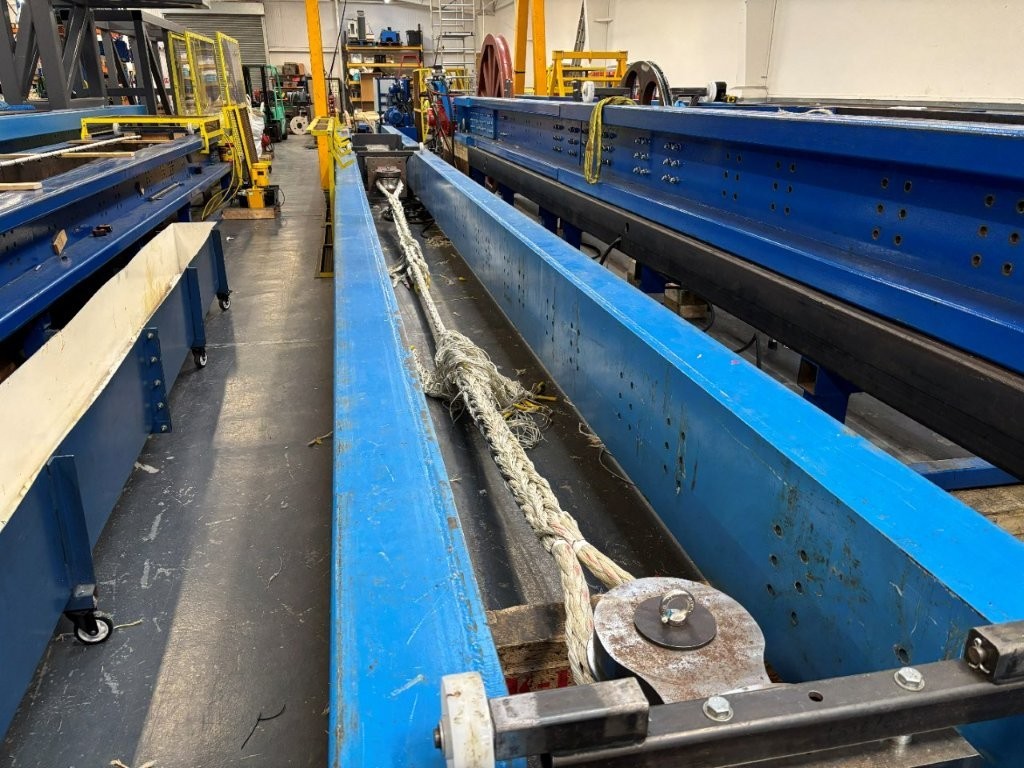
Within the TAILWIND project, TTI Testing will carry out testing and characterisation of synthetic mooring rope materials, including Polyester, Nylon and High-Modulus Polyethylene (HMPE). This experimental work will generate data to support the evaluation and development of innovative station-keeping solutions for floating offshore wind.

TTI Testing is a well-established independent testing laboratory with extensive experience in the mechanical testing and characterisation of materials and components for offshore and marine applications. As part of the wider Tension Technology International (TTI) Group, the organisation benefits from decades of expertise in rope engineering, mooring system design and offshore renewable energy solutions, supporting clients worldwide through testing, consultancy and engineering services.

The addition of TTI Testing strengthens the consortium’s testing and validation capabilities, ensuring that new materials and design concepts can be supported by high-quality experimental results. Their contribution will play an important role in advancing practical and reliable solutions that support the long-term growth of floating offshore wind.

Image credit: Tension Technology International

February 23, 2026

EERA DeepWind 2026: a deep dive into fibre mooring lines and sustainability

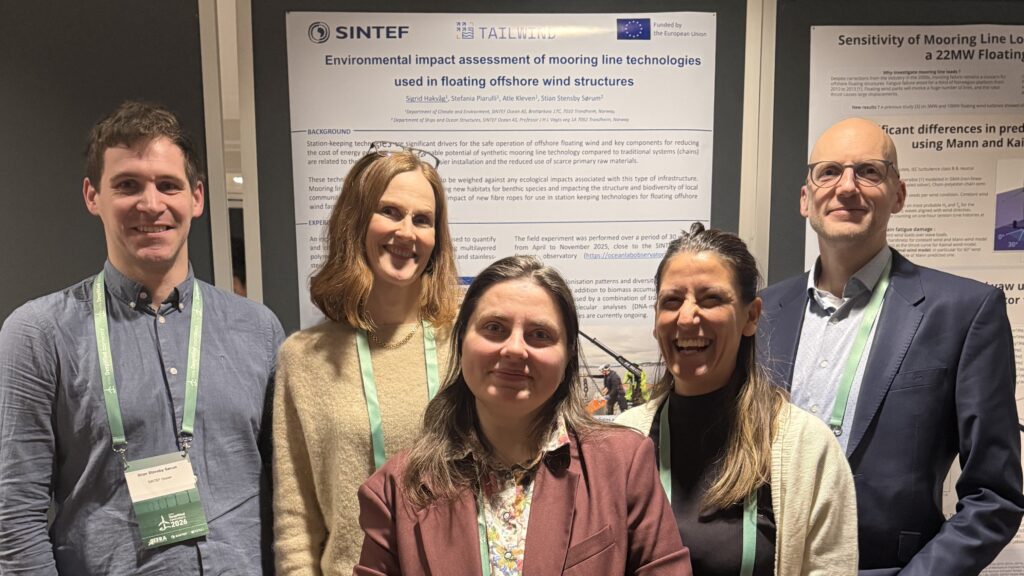
SINTEF team joined EERA DeepWind 2026 and presented TAILWIND insights on sustainable synthetic mooring lines

TAILWIND project partner SINTEF OCEAN AS recently took part in the EERA DeepWind offshore wind R&I conference in Trondheim, joining more than 250 researchers and industry leaders to exchange the latest results on accelerating offshore wind deployment in Europe. Many discussions reflected two priorities shaping floating offshore wind today: cutting costs while raising sustainability ambitions. A close connection to TAILWIND’s work on synthetic mooring lines.

“It was inspiring to attend the DeepWind conference in Trondheim. Presentations and discussions highlighted how both cost reduction and increased sustainability are required for the industry to move forward, which aligns well with the work being done on synthetic mooring lines in TAILWIND” confirmed Stian Stensby Sørum, from SINTEF OCEAN AS

During the opening panel debate, sustainability emerged as a central theme for the sector’s next steps. Across sessions, participants also addressed a key question for floating offshore wind innovation: who carries responsibility for sustainability when new materials and solutions are introduced. Based on the collaboration in TAILWIND, SINTEF is so far seeing industry partners actively stepping up on this responsibility. Keynotes and technical presentations further underlined the potential of synthetic mooring lines as an enabling technology, particularly polyamide (nylon). Speakers highlighted how these solutions can support more cost-efficient mooring systems while also helping reduce emissions, reinforcing the relevance of ongoing work within TAILWIND.

At the conference, the SINTEF team contributed with two presentations and a poster highlighting different sustainability dimensions of synthetic mooring lines. The contributions covered ecotoxicity screening of polymer materials, assessment of recycling options and post-decommissioning value chains for fibre mooring lines, and analysis of how different mooring technologies interact with marine ecosystems.

EERA DeepWind is an offshore wind research and innovation conference yearly held in Trondheim, where research scientists and industry experts share findings and perspectives on strengthening offshore wind deployment in Norway and Europe. The conference is organised in collaboration between the EERA Joint Programme Wind Energy, the Norwegian University of Science and Technology (NTNU), and SINTEF. Learn more on the official website.

Photo credits: SINTEF OCEAN AS

January 27, 2026

Boost impact in EU wind energy: how women can lead innovation

TAILWIND’s Irene Brenes (ClarkeModet) highlighted how supporting women in innovation and intellectual property boosts the impact of EU energy projects.

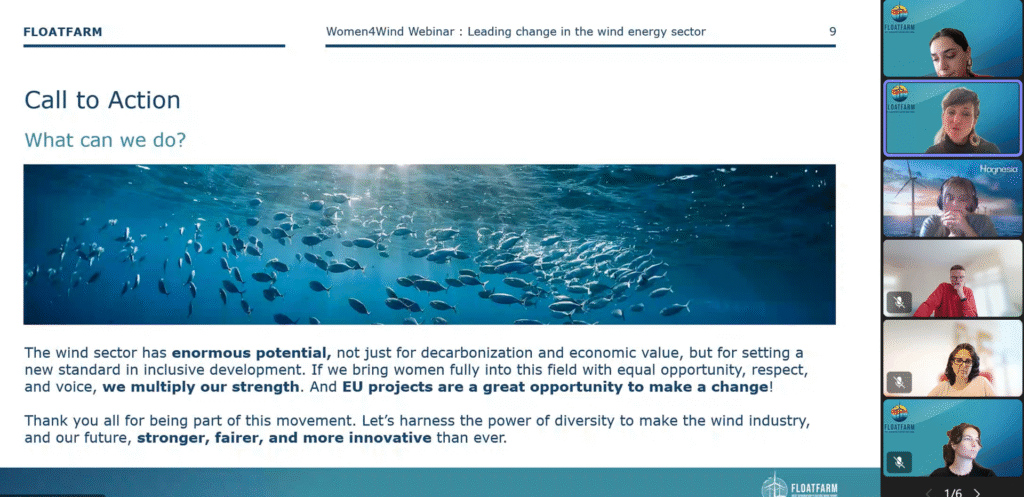
Supporting women’s active involvement in innovation and intellectual property is crucial for the success and long-term impact of EU energy projects. That was the main message shared by TAILWIND during the Women4Wind webinar, with IP consultancy specialist Irene Brenes (ClarkeModet) outlining how early integration of women in the innovation process can significantly enhance project outcomes.

“Women should not just be present in EU projects, they should be recognised as key drivers of value creation and leaders in innovation,” said Irene Brenes. “With tailored IP training, visible role models and gender-sensitive strategies, we can create more inclusive and effective research teams in wind energy and beyond. Women’s participation in EU projects is not just about equality, it’s about unlocking the full potential of innovation.”

Organised by FLOATFARM with sister projects TAILWIND, INF4INITY and MADE4WIND, the Women4Wind webinar brought together a diverse panel of experts, entrepreneurs and researchers to discuss pathways to greater gender equality in wind energy. Speakers explored the importance of mentorship, inclusive leadership, and supporting women in high-impact sectors such as energy, telecommunications and technology.

women4wind webinar tailwind

Addressing the question “How can we encourage and sustain women’s participation in EU projects?”, Irene Brenes identified three priority areas to unlocking more diverse ideas and stronger, more sustainable results in EU projects. First, increasing visibility and recognition for women inventors and innovators through role models and success stories. Second, building structural support by integrating gender-sensitive IP strategies and ensuring women are positioned to lead and benefit from innovation. Third, promoting a sectoral focus that drives female participation in high-impact fields like energy and technology, where women remain underrepresented.

The programme also featured keynote talks, personal stories and an interactive Q&A session, encouraging organisations to rethink traditional models and ensure that all talents are empowered to contribute. Visit the dedicated page on FLOATFARM website and watch the webinar recording 

October 30, 2025