TAILWIND welcomes TTI Testing as a new project partner

TAILWIND research on mooring ropes strengthens with UK partner TTI Testing LTD joining the project consortium

The TAILWIND project co-funded by the European Union, with support for UK partners provided by UK Research and Innovation (UKRI), is pleased to welcome TTI Testing Ltd in the consortium.

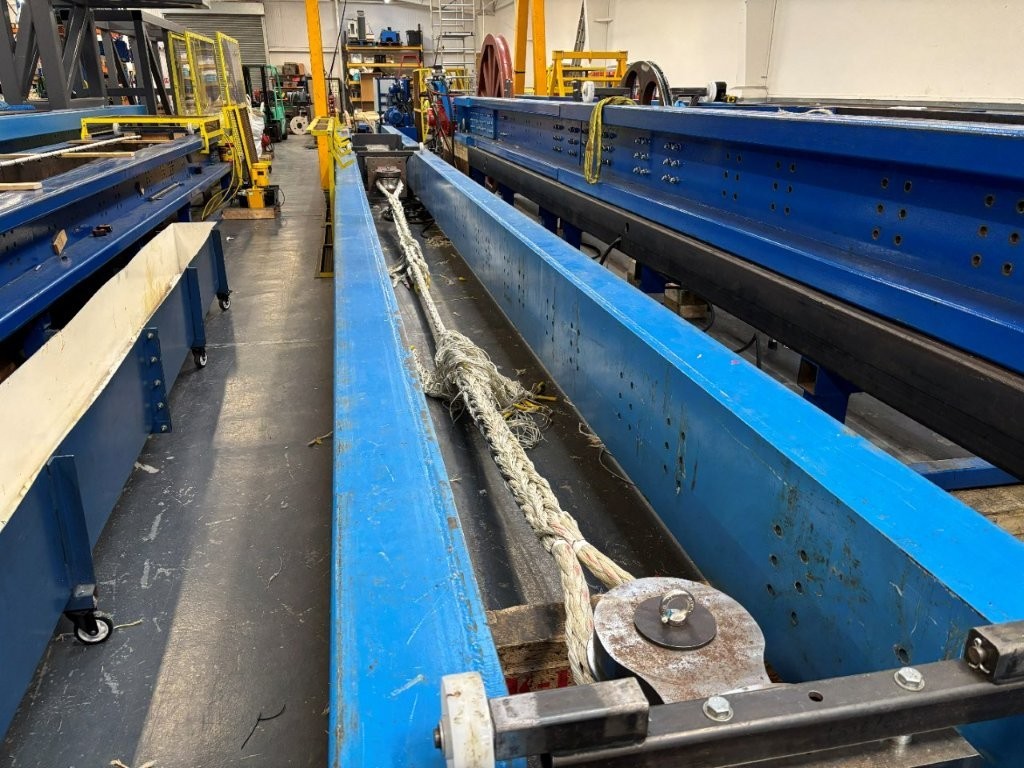
Within the TAILWIND project, TTI Testing will carry out testing and characterisation of synthetic mooring rope materials, including Polyester, Nylon and High-Modulus Polyethylene (HMPE). This experimental work will generate data to support the evaluation and development of innovative station-keeping solutions for floating offshore wind.

TTI Testing is a well-established independent testing laboratory with extensive experience in the mechanical testing and characterisation of materials and components for offshore and marine applications. As part of the wider Tension Technology International (TTI) Group, the organisation benefits from decades of expertise in rope engineering, mooring system design and offshore renewable energy solutions, supporting clients worldwide through testing, consultancy and engineering services.

The addition of TTI Testing strengthens the consortium’s testing and validation capabilities, ensuring that new materials and design concepts can be supported by high-quality experimental results. Their contribution will play an important role in advancing practical and reliable solutions that support the long-term growth of floating offshore wind.

Image credit: Tension Technology International

February 23, 2026

EERA DeepWind 2026: a deep dive into fibre mooring lines and sustainability

SINTEF team joined EERA DeepWind 2026 and presented TAILWIND insights on sustainable synthetic mooring lines

TAILWIND project partner SINTEF OCEAN AS recently took part in the EERA DeepWind offshore wind R&I conference in Trondheim, joining more than 250 researchers and industry leaders to exchange the latest results on accelerating offshore wind deployment in Europe. Many discussions reflected two priorities shaping floating offshore wind today: cutting costs while raising sustainability ambitions. A close connection to TAILWIND’s work on synthetic mooring lines.

“It was inspiring to attend the DeepWind conference in Trondheim. Presentations and discussions highlighted how both cost reduction and increased sustainability are required for the industry to move forward, which aligns well with the work being done on synthetic mooring lines in TAILWIND” confirmed Stian Stensby Sørum, from SINTEF OCEAN AS

During the opening panel debate, sustainability emerged as a central theme for the sector’s next steps. Across sessions, participants also addressed a key question for floating offshore wind innovation: who carries responsibility for sustainability when new materials and solutions are introduced. Based on the collaboration in TAILWIND, SINTEF is so far seeing industry partners actively stepping up on this responsibility. Keynotes and technical presentations further underlined the potential of synthetic mooring lines as an enabling technology, particularly polyamide (nylon). Speakers highlighted how these solutions can support more cost-efficient mooring systems while also helping reduce emissions, reinforcing the relevance of ongoing work within TAILWIND.

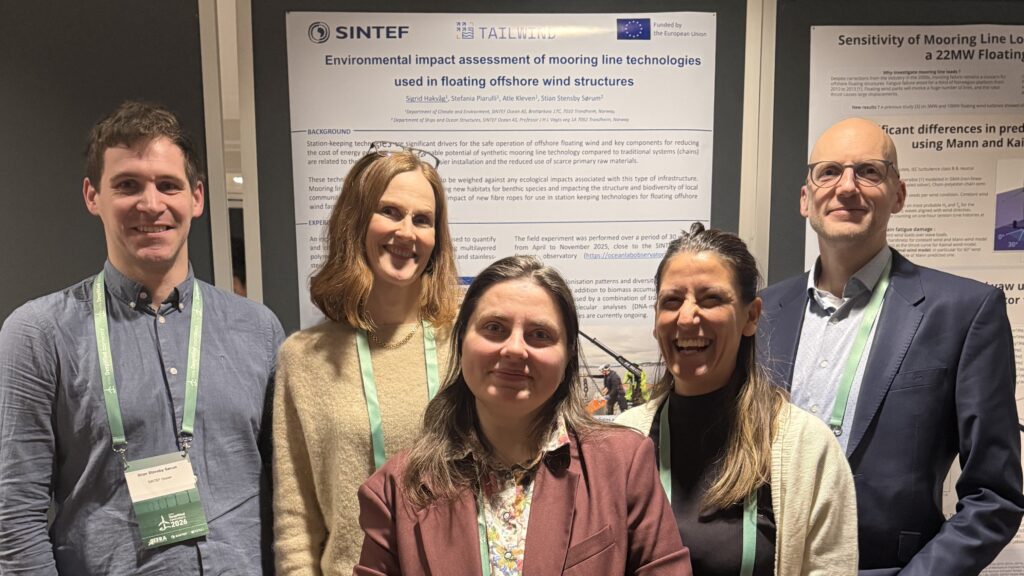
At the conference, the SINTEF team contributed with two presentations and a poster highlighting different sustainability dimensions of synthetic mooring lines. The contributions covered ecotoxicity screening of polymer materials, assessment of recycling options and post-decommissioning value chains for fibre mooring lines, and analysis of how different mooring technologies interact with marine ecosystems.

EERA DeepWind is an offshore wind research and innovation conference yearly held in Trondheim, where research scientists and industry experts share findings and perspectives on strengthening offshore wind deployment in Norway and Europe. The conference is organised in collaboration between the EERA Joint Programme Wind Energy, the Norwegian University of Science and Technology (NTNU), and SINTEF. Learn more on the official website.

Photo credits: SINTEF OCEAN AS

January 27, 2026